The Journey to the Lighthouse and Changing Ideals
To the LighthouseThe Journey to the Lighthouse and Changing Ideals is the novel’s central movement from a childhood promise deferred to a voyage finally completed, but its significance lies in the distance between those two moments. For James, the Lighthouse first belongs to an ecstatic future imagined from his mother’s words; when the family at last sails there, years and bereavements have changed the people, the journey, and the object of expectation. The destination remains, yet it can no longer mean only what the child once wanted it to mean. The voyage’s eventual completion coincides with Lily Briscoe’s finishing her painting, joining physical arrival to an artistic act that preserves a moment without restoring the past.
The Promise and Its Reversal
The journey takes shape when Mrs Ramsay tells six-year-old James that they may go the next day if the weather is fine. Her conditional answer reaches him as certainty. Cutting pictures from the Army and Navy Stores catalogue, he invests even the picture of a refrigerator with the joy of the anticipated expedition: the future colors ordinary things, while the prospect of the Lighthouse seems close enough to touch after a night and a day’s sailing. His intense imaginative response establishes the journey not merely as a family outing but as a private ideal already shaping the present.
That hope is abruptly challenged by Mr Ramsay, who says it will not be fine. The difference between his blunt forecast and Mrs Ramsay’s conditional possibility makes the excursion a point of family conflict as well as a test of James’s expectations. Later, when James asks again, Mrs Ramsay promises the trip for the next fine day, but not tomorrow. She knows that the earlier words have raised his hopes and that he will remember the disappointment. The delay therefore becomes part of the journey’s meaning: the child’s imagined destination is inseparable from the experience of being told that it cannot yet be reached.
The Years Between
The postponed voyage is set against the passage of time that changes the family and empties its summer house. The narrative moves from the household’s earlier life into nights and seasons marked by wind, darkness, and destruction. Mrs Ramsay dies suddenly; Mr Ramsay’s outstretched arms find no one there. The loss is stated with stark brevity, while the surrounding account dwells on the natural world’s indifferent succession of nights, storms, and waves. The journey’s eventual return cannot undo this absence or restore the earlier family arrangement.
When Lily returns to the house years later, the expedition is once again being prepared, now by Mr Ramsay, Cam, and James. The ordinary logistics are unsettled: the tide must be caught, Cam and James are not ready, Nancy has forgotten to order sandwiches, and Mr Ramsay loses his temper and leaves the room. This hurried, imperfect preparation contrasts with the child’s earlier vision of an expedition bound to happen. The promised voyage has survived in memory, but its realization belongs to a changed household in which Mrs Ramsay is dead and other family members must carry the practical burden of departure.
The Lighthouse Seen Differently
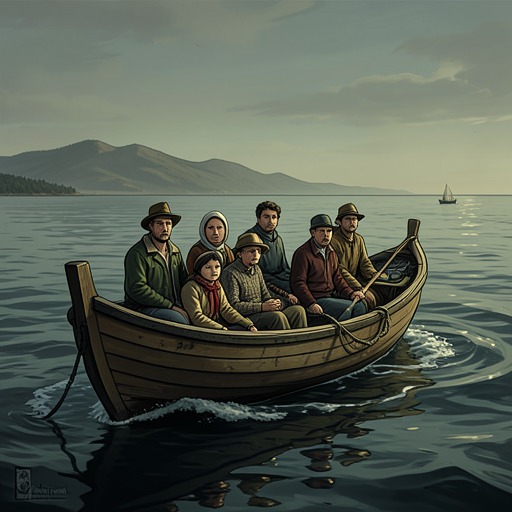
From the lawn, Lily watches a small boat apart from the others as its sail is raised. She understands that Mr Ramsay is in it with Cam and James, and sees it set out deliberately across the water. The scene is distant and silent from her position; the voyage reaches her first as an image she watches rather than as an experience she shares. This separation places the family’s physical journey beside her own work and recollection.
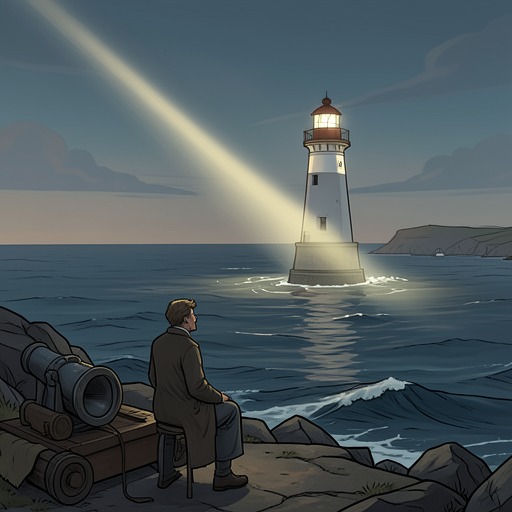
For James, the destination itself has changed. In memory, the Lighthouse was a silvery, misty tower whose yellow eye opened softly in the evening. Now he can distinguish its whitewashed rocks, straight tower, black-and-white bands, windows, and washing spread to dry. The present sight is concrete and almost domestic, not the mysterious object of childhood anticipation. Yet he recognizes that the remembered Lighthouse is also true: the distant evening light, opening and shutting across the bay, remains part of what the place is to him. The novel refuses to make one version cancel the other. The object is at once a visible structure and the remembered ideal formed around it; as James’s perception insists, nothing is simply one thing.
The actual approach retains the frustrations of travel rather than becoming a seamless fulfillment. The boat sits nearly motionless in the sun; the sails ripple and fall still. Mr Ramsay, impatient with the delay, speaks sharply to Macalister’s boy and waits for a breeze, while James steers and Cam sits in the bow. When Mr Ramsay eventually shuts his book and announces that they are almost there, his words startle Cam from sleep. For a moment she imagines some extraordinary adventure or a landing and climb; instead, he says he is hungry and that it is time for lunch. Arrival is presented through this unceremonious turn from imagined adventure to practical need.
Memory, Art, and Completion
The journey’s importance also emerges through Lily’s reflection on how experience can outlast the circumstances that produced it. Remembering a beach scene in which she and Charles Tansley skipped stones while Mrs Ramsay wrote letters under a rock, she sees how Mrs Ramsay’s presence had brought irritation and quarrelling into a moment of friendship. The memory survives as a coherent scene that Lily can revisit and reshape, almost as a work of art. Its permanence is not the return of the past itself, but the later mind’s ability to hold the moment in a form that remains meaningful.
Lily connects this act of making to the uncertain meaning of life. She has not received a single overwhelming revelation; instead, she recognizes small illuminations in daily experience. Mrs Ramsay’s remembered words, the breaking wave, and the past friendship gather into one such moment. The scene’s passing motion becomes, in memory, something stable—just as Lily attempts to make the moment permanent through painting. This reflection gives the Lighthouse journey a parallel in art: both are directed toward something beyond the immediate present, but neither can recover an unchanged past.
When Lily hears that the voyagers have landed, she turns back to her canvas. She sees its greens and blues and its lines running up and across, while acknowledging that the picture might be put away in an attic or destroyed. Its value does not depend on public recognition or permanence as a physical object. Taking up her brush, she draws a line in the center and understands that the painting is finished. The voyage has reached its destination, and Lily has brought her work to completion; these endings occur alongside one another, not as a restoration of Mrs Ramsay’s world but as distinct acts of arrival. The ideal has changed through waiting, bereavement, and perception, yet the journey’s completion and the final line make it possible to affirm what has been achieved without pretending that loss has been reversed.